
The WhitebredShorthorn
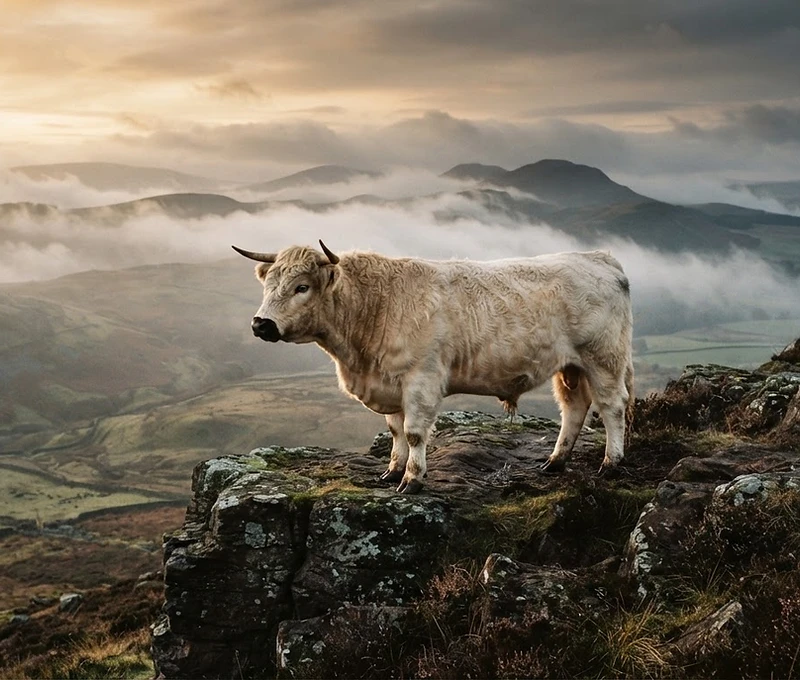
Known originally as the Cumberland White, the Whitebred Shorthorn is a distinct, always-white branch of the Shorthorn family — never specialised for beef or dairy, and so kept as the hardy, thrifty upland type that sires the celebrated Blue Grey. Today it is among the rarest native cattle in Britain, listed At Risk by the Rare Breeds Survival Trust.
Anatomical
precision,
archived.
Every standard, measured. Unlike its specialised Beef and Dairy cousins, the Whitebred Shorthorn was never split for the showyard or the dairy — it remains the traditional, thrifty upland type, refined across two centuries of border breeding for hardiness, quiet temperament, and unrivalled crossing merit with the black Galloway cow and the Aberdeen Angus to create exceptional hybrid vigour.

Coat & Constitution
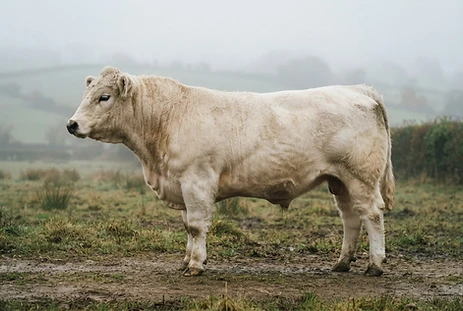
The breed's defining creamy-white outer coat sits over a thick, mossy undercoat — a double layer that insulates against driving border weather and lets the cattle outwinter on poor upland forage without supplementary feed. The white coat is a required breed characteristic, and the pigmented skin beneath helps protect against sun and flies in exposed upland conditions; the undercoat sheds in spring to a lighter summer coat that still turns the rain. The coat's natural oiliness helps shed the relentless border rain, and the breed's thrift means cows can hold condition on forage that would barely sustain a continental animal. The same thrift makes them outstanding conservation grazers, cropping rank grasses to keep hill pastures open and botanically diverse.
The calving solution
you've been
looking for.
Every cattle producer knows that managing first-time heifers is one of the most high-stakes periods on the farm. Dystocia — calving difficulty — can devastate your herd's productivity, leading to high veterinary costs, lost calves, and damaged heifers. Fortunately, nature and strategic breeding provide an exceptional solution: the Whitebred Shorthorn bull.

Naturally engineered
for easy calving.
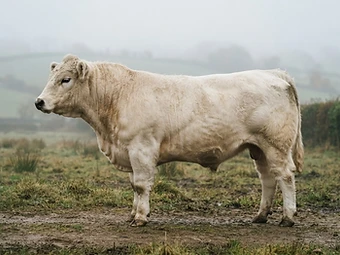
Renowned for decades as the premier choice for maternal crossing, the Whitebred Shorthorn is genetically predisposed to throw calves with exceptionally light birth weights and fine, streamlined bone structures. When modern commercial beef producers cross a Whitebred Shorthorn bull with young Galloway heifers and Angus heifers, the biological synergy is unmatched:
Sleek Calf Profiles
The fine-boned genetics ensure the calf is shaped to slide out naturally and easily, dramatically reducing maternal-fetal disproportion.
Drastically Lowered Dystocia Risk
By keeping birth weights modest, you protect your young heifers from pelvic trauma, ensuring a rapid recovery and a faster return to the breeding cycle.
The Legendary Blue-Grey Advantage
This cross doesn't just protect your heifers — it produces highly marketable, exceptionally hardy, and vigorous hybrid calves that command top value in the marketplace.
Protect your investment,
secure your profits.
Don't let calving difficulties compromise the future of your replacement heifers. By introducing a Whitebred Shorthorn sire to your Angus herd, you are investing in peace of mind during calving season, superior animal welfare, and elite hybrid vigour.
Choose the time-tested, genetically proven path to seamless calving.
Choose Whitebred Shorthorn →
Two centuries
of lineage.
Origins in the Uplands
White cattle of the English–Scottish border counties are bred on as a distinct, always-white branch of the Shorthorn — never specialised for beef or dairy, and so kept as the hardy, thrifty upland type. It becomes known locally as the Cumberland White.
The Blue Grey is Born
David Hall of Larriston, Newcastleton, and Andrew Park of Stelshaw, Cumberland, sell Blue-grey suckled calves at the Newcastleton suckler sales — the cross of the Whitebred bull on the black Galloway cow that gives the breed its enduring purpose.
The Association Forms
On 12 March 1962, almost 200 breeders meet to found the Whitebred Shorthorn Association, opening a herd book and fixing the breed standard. Official society sales follow at Newcastleton and Bellingham in 1964, and at Carlisle from 1965.
Recognised as Rare
As continental beef breeds reshape commercial agriculture, Whitebred numbers collapse. The breed is listed by the newly-founded Rare Breeds Survival Trust and survives only through the dedication of a handful of upland keepers.
Essential Once More
Now graded At Risk by the RBST — society sales in Carlisle run to single figures — the breed finds new purpose in conservation grazing, where its hardiness and thrift maintain the diverse flora of hill pastures, and in the renewed demand for the Blue Grey.